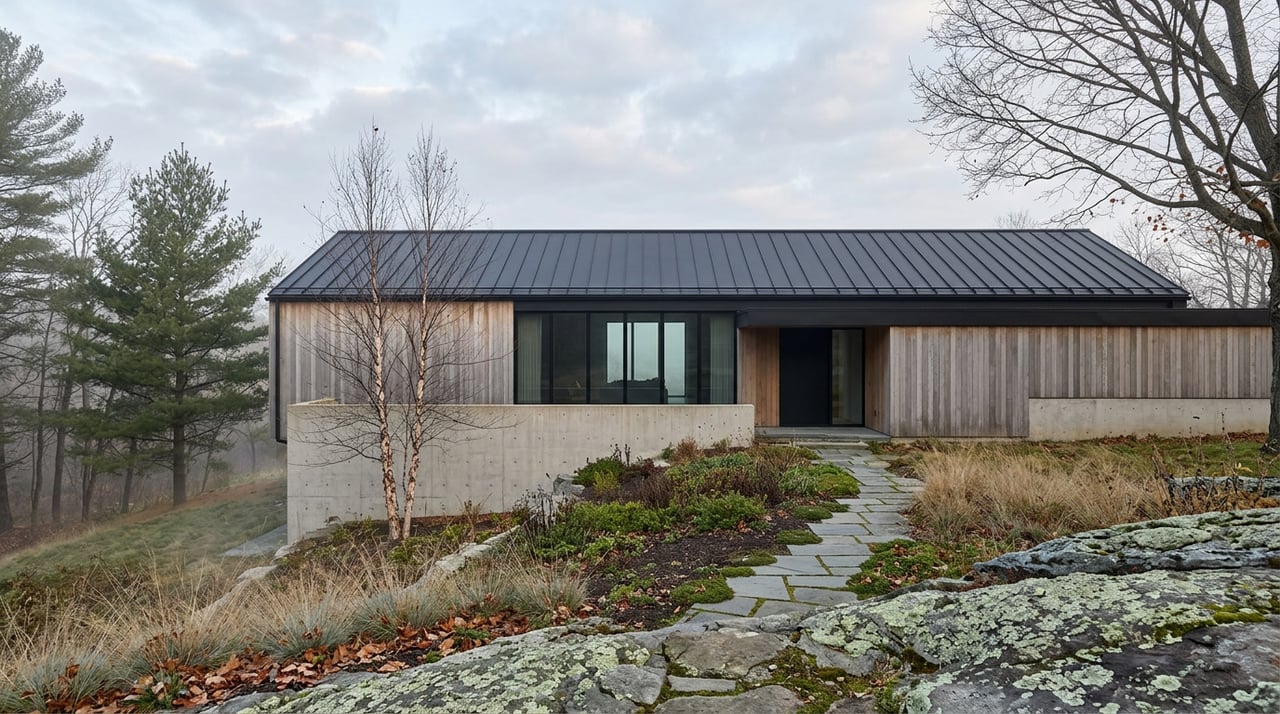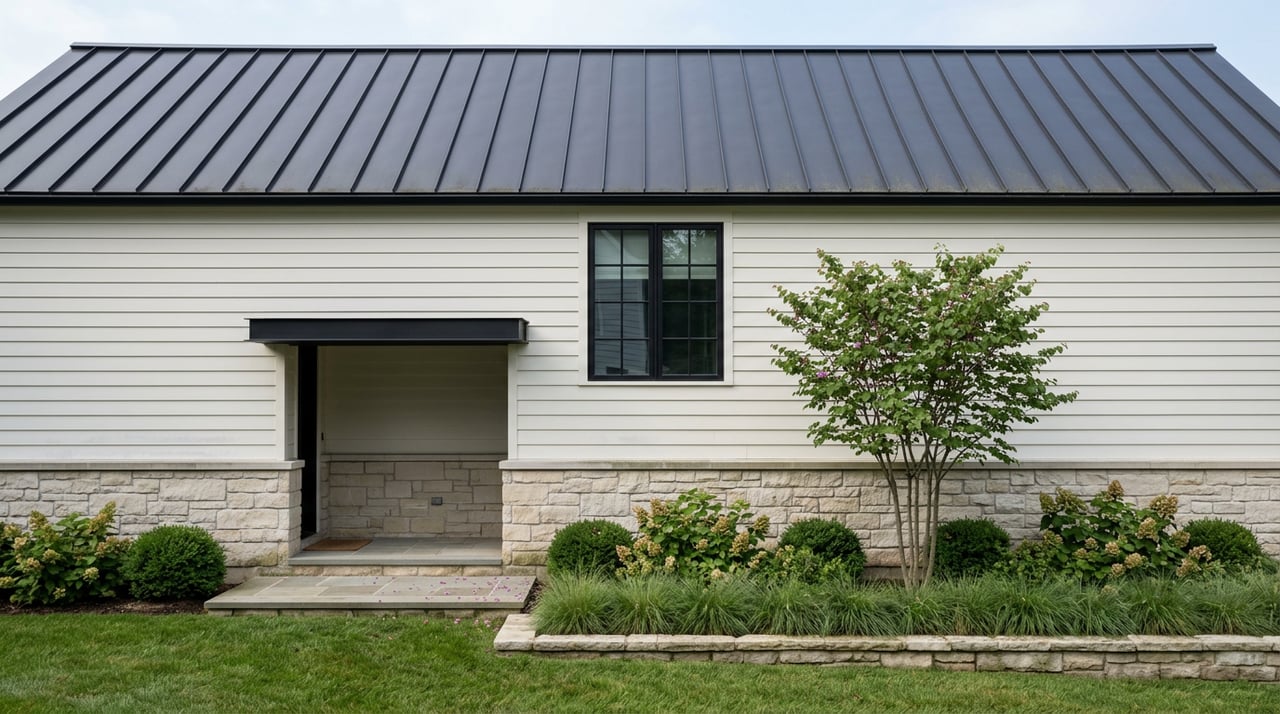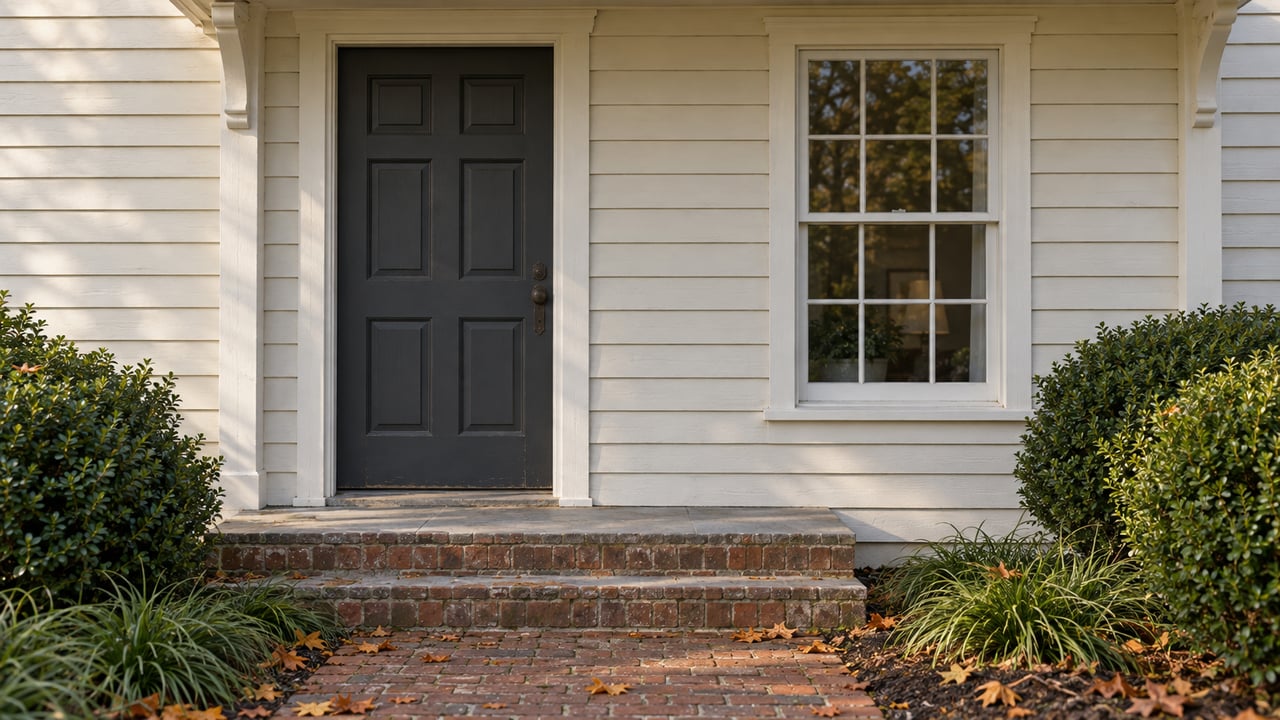
On July 14, 2026, the Wethersfield Historic District Commission spent part of its meeting arguing about a garage door on Garden Court. Not whether a garage door could go in. Whether this particular one, with its panoramic windows and strap-style hardware, looked enough like the original to pass. Commissioners went back and forth on whether the hardware would read as fake, whether the proportions matched, whether a passerby on the street would clock the difference. They approved it, but only after stripping out the decorative straps and settling on two plain handles instead of the applicant's first choice.
That level of scrutiny is normal here. If you are buying, selling, or renovating inside Old Wethersfield's historic district, the design debate is not the part that catches people off guard. The part that catches people off guard is the calendar.
What a Certificate of Appropriateness Actually Covers
Old Wethersfield's historic district was established in 1962 and is the largest in the state, encompassing more than 150 structures built before 1850. Inside its boundaries, which run roughly from the Rocky Hill town line to the Hartford town line, bounded by the railroad tracks on one side and I-91 on the other, any physical change to a building's exterior that would be visible from a public street requires a Certificate of Appropriateness, or COA, before a building permit can even be issued.
That covers more than most owners expect: windows, doors, siding, roofing, fences, decks, garages, and outbuildings all require review. Ordinary repair that does not change the existing design or materials is exempt, and a handful of narrow carve-outs exist, like storm windows without ornamental grilles or wood shingles on structures built before 1840. Everything else goes in front of an eight-member commission, five regular members and three alternates, appointed by the Town Council to weigh in on window profiles, door hardware, and siding color before anyone picks up a hammer.
The Calendar Nobody Budgets For
The Historic District Commission meets on the second and fourth Tuesday of each month, except December. Applications have to clear a submission deadline before they land on an agenda, which means missing a cutoff by even a day can push a hearing to the next cycle roughly two weeks out, sometimes a full month if the deadline you missed was the second-Tuesday one.
State statute layers on more structure. Once an application is filed, the commission has 45 days to set a public hearing date and 65 days total to issue a decision. If it fails to act within that window, the application is automatically approved by default. The town's own guidance puts the realistic range at two weeks to two months from start to finish, depending on complexity, which lines up with what the minutes show: straightforward requests clear in a single meeting, contested ones get tabled and come back.
The commission's own project pipeline in January 2026 shows that tabling is not rare, even for routine work. When the Town of Wethersfield's engineering department applied for a multi-use trail near the Keeney Memorial Cultural Center, the commission tabled the application pending more detail, despite the applicant being the town itself. If a municipal department doesn't get a rubber stamp, a homeowner swapping out windows shouldn't expect one either.
What Recent Applications Actually Look Like
The minutes from the past year read less like bureaucracy and more like a running argument about authenticity. A sample of what has actually come before the commission:
| Applicant / Address | What They Wanted | What Happened |
|---|---|---|
| Richard and Cindy Wasserman, 65 Slate Street | Replace 13 deteriorated wood windows (110-year-old home) with white Harvey Majesty aluminum-clad windows | Reviewed March 2026, discussed condition and replacement profile |
| TJ Magnoli, 175 Garden Street | Replace a rotted wood front door with a new door matching the sidelight glass pattern | Approved, but only after a commissioner pushed for a fuller glass pattern to preserve symmetry |
| James Campbell, 305 Hartford Avenue | Convert a rear carriage house into an apartment using Pella aluminum-clad windows and cedar shake siding | Approved as submitted |
| Town of Wethersfield Engineering, near Keeney Memorial Cultural Center | Construct a 10-foot multi-use trail on a new alignment | Tabled pending further design detail |
| 122 Garden Court | Install a new garage door with panoramic windows | Approved only after removing strap hardware and simplifying handles |
Window replacement shows up more than any other request type, and it is where the commission's line between "acceptable" and "not appropriate" gets the most specific. Vinyl and aluminum-clad replacements do get approved, as the Wasserman and Campbell applications show, but the commission is weighing grille pattern, glass type, and profile against what already exists on the house, not just whether the new product is energy efficient or budget-friendly. A Patch report on the commission's September 8, 2026 agenda lists five more applications in the same vein: a Main Street barn and garage rebuild finished in rough-sawn pine to match the existing siding, a Spring Street apartment complex proposing vinyl siding in place of cedar, and a Middletown Avenue home swapping vinyl siding for a different vinyl product while replacing porch storm windows with Andersen units. None of these are unusual projects. All of them needed a hearing.
The Part That Actually Trips People Up
Here is the detail that matters most for anyone timing a renovation around a purchase or a listing: a Certificate of Appropriateness is only valid for one year. If you get approved in October but don't pull your building permit and start work within twelve months, the approval lapses and you go back through the process from the beginning, new hearing, new public notice, new wait.
That changes how a renovation actually has to be sequenced. It is not enough to budget for the cost of the work or the time a contractor needs. The realistic sequence looks like this: design the project, submit before a meeting deadline, wait through however many meeting cycles the application needs (one if it's simple, several if a commissioner wants a design revision), get the COA, then get the building permit lined up and the contractor scheduled, all inside that one-year clock. A homeowner who assumes the historic district only adds a few weeks of paperwork is planning against the wrong model. The real constraint is fitting design, review, and construction start into a single calendar year that runs on the town's meeting schedule, not the buyer's moving timeline.
What This Means If You're Buying or Selling Here
For a seller preparing an Old Wethersfield colonial for market, this argues for starting any exterior work, window replacement especially, well before listing photos are scheduled, since a tabled application can eat a month you don't have if you're trying to hit a spring market window. For a buyer who has fallen for a house with original but failing windows, it means asking during due diligence whether any COA is already on file, whether it's still active, and what specific materials it authorizes, since an approval tied to a previous owner's chosen window brand doesn't transfer intent if the new owner wants something different.
It's also worth asking the seller directly whether any exterior work is currently underway or was recently approved. An expired COA on a partially finished project is not the kind of thing that shows up on a standard walkthrough, but it is the kind of thing that determines whether you can finish what the previous owner started or have to start the clock over.
A Few Questions Worth Asking Directly
Does every exterior repair need a Certificate of Appropriateness? No. Ordinary maintenance that doesn't change the existing design, material, or scale is exempt, along with a short list of specific items like storm windows without ornamental grilles.
What happens if the commission never rules on an application? State law gives the commission 65 days from filing to decide. If it doesn't act within that window, the application is automatically approved.
How do I confirm whether a specific property is inside the historic district? The boundary is defined by town ordinance, running along the Rocky Hill and Hartford town lines, the railroad tracks, and I-91. The Historic District Coordinator or the town's Building Department can confirm a specific address.
If a COA is approved but the work never started, does it carry over to a new owner? It doesn't, not indefinitely. The certificate expires one year after approval regardless of who owns the property, so a lapsed COA means reapplying under current commission review, not picking up where the paperwork left off.
If you're weighing a purchase in Old Wethersfield's historic district, or trying to time a renovation before your own home goes on the market, the design questions are usually the easy part. The scheduling is where a plan either holds together or falls apart. Meghan Girard works through that calendar with clients before it becomes a problem, not after. Reach out to talk through the timeline on your specific property before you file anything.